The Future of Ophthalmology May Not Be Cornea-Dependent
Ophthalmology is entering a new era.
For decades, most diagnostic and therapeutic technologies were designed around one assumption: the cornea would remain directly accessible. Traditional contact lenses were removed before examination, intraocular pressure (IOP) was measured directly through the cornea, and clinicians worked with a relatively unobstructed ocular surface.
That assumption is beginning to change.
Today’s ophthalmologists and optometrists are seeing rapid advances in scleral lenses, therapeutic contact lenses, drug-delivery lenses, biosensing devices, smart contact lenses, and augmented reality (AR) ocular wearables. Many of these technologies are specifically designed to remain on the eye for extended periods, becoming part of the patient’s daily visual and therapeutic environment.
As these innovations continue to evolve, one practical clinical question becomes increasingly important:
How should clinicians measure intraocular pressure without removing the device they are evaluating?
Corneal-independent tonometry may represent one important answer.

Beyond the Cornea
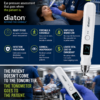
The Diaton® transpalpebral scleral tonometer was developed around a fundamentally different measurement philosophy.
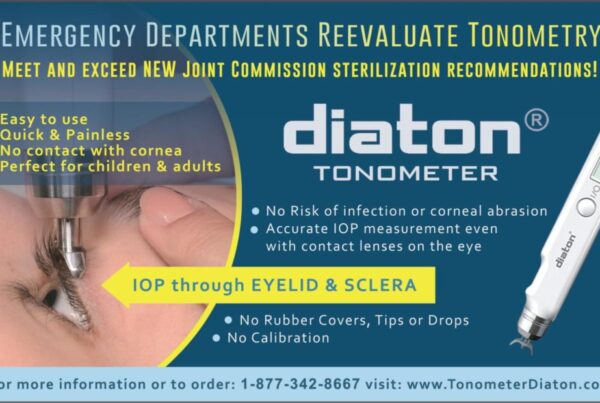
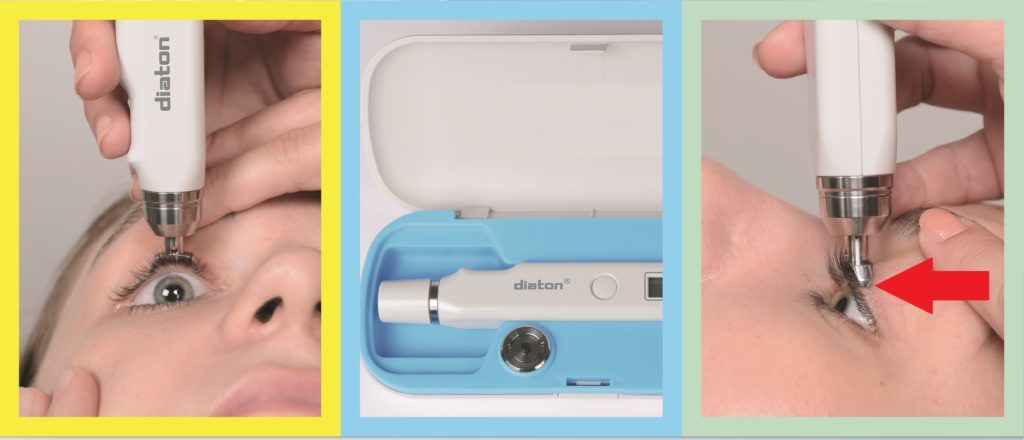
Rather than accessing the cornea directly, the Diaton measures through the upper eyelid over the sclera.
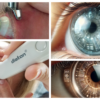
During proper technique, the upper eyelid is gently elevated so its edge lies just above the limbus (or above the edge of a contact or scleral lens), while the Diaton tip is positioned centrally on the upper eyelid over the tarsal plate, aligned with the pupil.
The cornea remains untouched.
Any contact lens, scleral lens, or future ocular wearable remains undisturbed.
The measurement pathway is independent of the corneal surface.
Although originally developed to overcome limitations associated with corneal pathology and post-refractive surgery eyes, this same design may become increasingly valuable as ophthalmology embraces wearable technologies.
The Wearable Eye Is Already Here
Today’s wearable ophthalmic technologies include:
- Scleral lenses
- Therapeutic contact lenses
- Drug-eluting lenses
- Extended-wear bandage lenses
- Smart contact lenses
- Biosensing lenses
- Glucose-monitoring lenses
- Augmented reality (AR) lenses
- Mixed reality (MR) ocular systems
- Continuous ocular monitoring platforms
Many additional technologies are currently under development.
Unlike traditional diagnostic devices, these innovations are intended to stay on the eye, sometimes continuously.
Consequently, future eye care will increasingly require diagnostic methods capable of evaluating ocular physiology without disturbing the therapeutic or technological environment.
Why Measuring IOP During Wear Matters
Recent research suggests this challenge is already becoming clinically relevant.
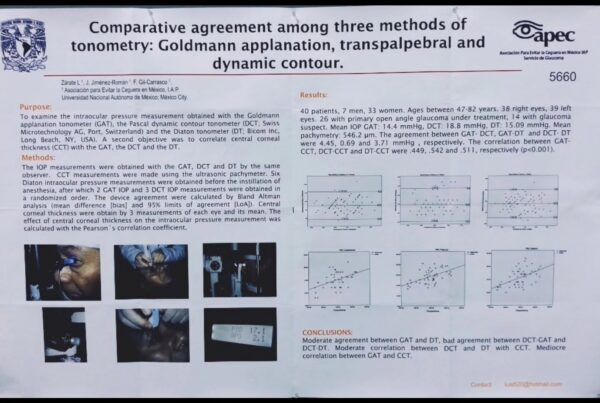
A 2026 prospective crossover study by Dhungel et al. evaluated intraocular pressure during scleral lens wear using transpalpebral tonometry. Ref: https://www.mdpi.com/2075-1729/16/7/1094
The investigators reported:
- Approximately 4.5 mmHg elevation in IOP during scleral lens wear in healthy subjects.
- Transient retinal nerve fiber layer changes during wear.
- Return toward baseline following lens removal.
- Need for additional research involving glaucoma and ocular hypertension patients.
These findings do not suggest scleral lenses are unsafe.
Rather, they emphasize that clinicians, researchers, and manufacturers may increasingly need practical methods to monitor IOP while lenses remain in place.
Traditional Corneal Tonometry Faces a Practical Challenge
Goldmann applanation tonometry remains an important clinical reference method.
However, Goldmann and most commonly used tonometers require direct access to the cornea.
This presents obvious challenges whenever the cornea is intentionally covered by:
- scleral lenses
- therapeutic lenses
- smart contact lenses
- ocular drug-delivery systems
- future ocular wearables
In many situations, removing the device interrupts the very physiological environment clinicians wish to study.
Instead of evaluating the eye during real-world wear, the examination becomes a post-removal assessment.
Those are not always equivalent.
Corneal-Independent Measurement Creates New Possibilities
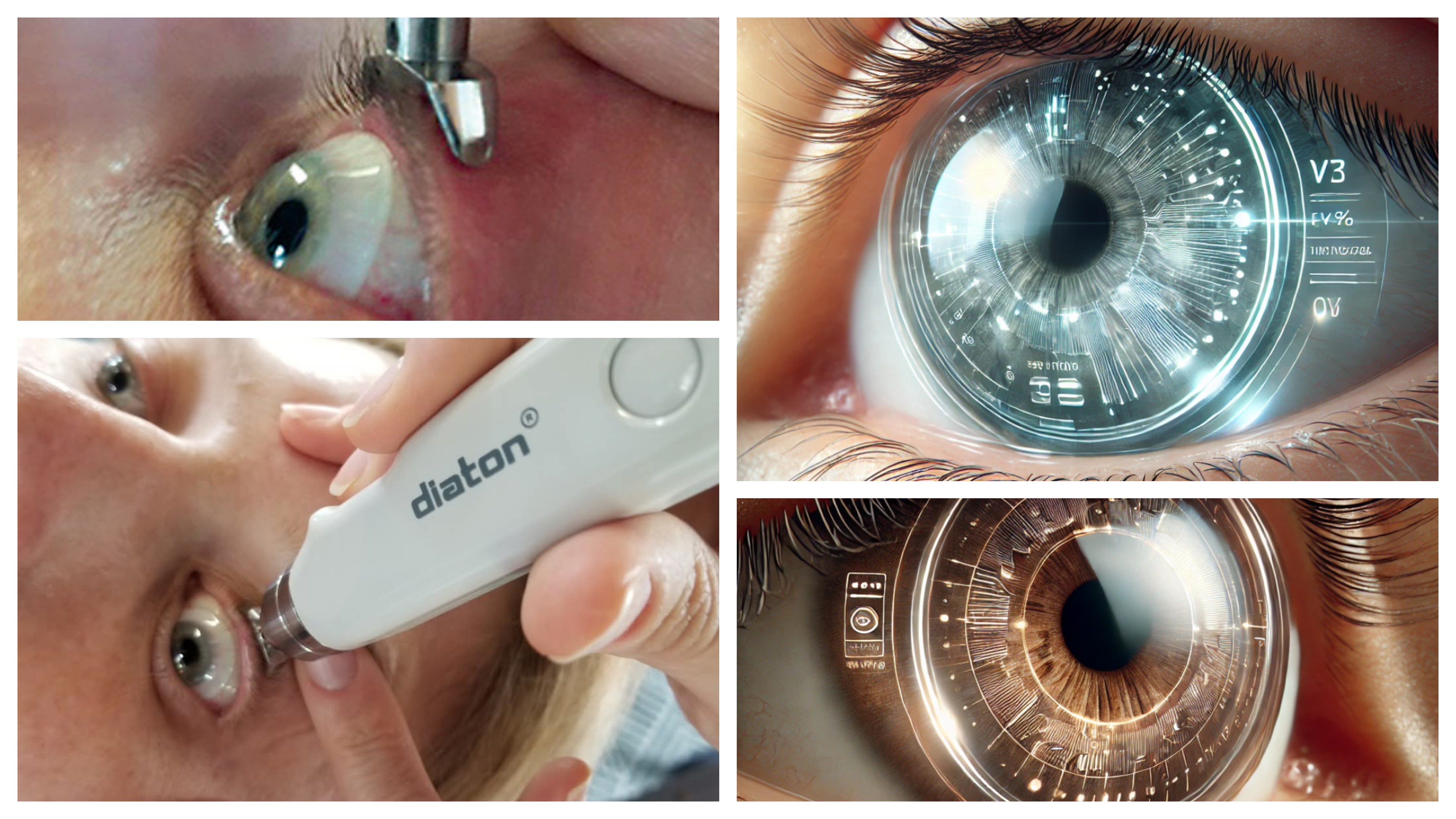
Because Diaton measures through the upper eyelid over the sclera, the corneal surface remains completely undisturbed.
This allows clinicians to assess intraocular pressure while:
- contact lenses remain in place
- scleral lenses remain in place
- therapeutic devices continue functioning
- future smart lenses remain active
As wearable ophthalmic technologies become increasingly sophisticated, maintaining the natural ocular environment during examination may become more valuable than ever.
Supporting the Next Generation of Ophthalmic Innovation
This discussion extends beyond routine patient care.
Companies developing future ophthalmic technologies must demonstrate long-term safety.
Clinical researchers require practical methods to monitor study participants.
Investigators must evaluate whether new ocular devices influence intraocular pressure over time.
Optometrists and ophthalmologists will remain central to that process.
Corneal-independent tonometry may become one of the complementary tools supporting this evolving ecosystem.
Beyond Today’s Smart Contact Lenses
Today’s smart lenses represent only the beginning.
Future ophthalmic devices may include:
- AI-assisted contact lenses
- continuous glaucoma monitoring systems
- digital therapeutic platforms
- implantable ocular electronics
- drug-delivery wearables
- personalized vision enhancement systems
Many of these innovations will require periodic evaluation of ocular health while remaining on the eye.
The ability to measure IOP without disturbing the device could become increasingly valuable across research, regulatory studies, clinical trials, and routine patient care.
In many ways, Diaton’s measurement pathway anticipated this direction years before wearable ophthalmology became a mainstream topic.
A Complementary Clinical Tool
Corneal-independent tonometry is not intended to replace every existing tonometry method.
Goldmann applanation tonometry continues to serve as an important clinical reference.
Instead, Diaton provides an additional measurement option when direct corneal access is undesirable, impractical, or impossible.
Examples include:
- scleral lenses
- smart contact lenses
- therapeutic ocular wearables
- post-LASIK patients
- PRK patients
- keratoconus
- corneal scarring
- severe dry eye disease
- Boston Keratoprosthesis
- pediatric screening
- emergency medicine
- community glaucoma screening
Each patient presents unique anatomy and clinical considerations. Appropriate interpretation should always incorporate the complete ophthalmic examination, optic nerve findings, imaging, visual fields, and clinical judgment.
Looking Beyond the Cornea
The future of ophthalmology is increasingly wearable.
Diagnostic technologies must evolve alongside therapeutic innovations.
As more devices remain on the eye for hours, days, or even months, clinicians will require methods that can evaluate ocular physiology without interrupting those technologies.
Corneal-independent tonometry represents one practical pathway toward that future.
Sometimes the best way to measure eye pressure is not through the cornea at all.
Sometimes, the future begins Beyond the Cornea™.
Frequently Asked Questions
Can eye pressure be measured while wearing scleral lenses?
Yes. Diaton tonometer allows to measure through the upper eyelid over the sclera, above the lens – allowing intraocular pressure assessment while scleral lenses remain on the eye.
Does Diaton touch the cornea?
No. The cornea remains untouched during proper transpalpebral measurement.
Can eye pressure be measured without anesthetic drops?
Yes. Because the cornea is not contacted, topical anesthetic is generally unnecessary.
Why is measuring IOP during lens wear important?
Emerging research suggests some ocular wearables, including scleral lenses, may influence intraocular pressure during wear. Monitoring while the device remains in place may provide valuable clinical information in selected patients.
Is Diaton intended to replace Goldmann tonometry?
No. Goldmann remains an important clinical reference method. Diaton offers a complementary, corneal-independent approach for situations where direct corneal measurement may be limited or impractical.
References
- Dhungel P, Alanazi MK, Caroline P, Yudcovitch L, Liu M. Short-Term Impact of Scleral Lens Wear on Intraocular Pressure and Retinal Nerve Fiber Layer Thickness. Life. 2026;16:1094. https://www.mdpi.com/2075-1729/16/7/1094
- Diaton tonometer comparison trials and collection of articles: https://diaton.com/diaton-tonometer-comparison-trials/
Learn more about Diaton Tonometer:
- Diaton product page
- 100 Questions and Answers on Diaton
- How to use the Diaton Tonometer technique
- Diaton in post-LASIK / corneal pathology
- Diaton in emergency medicine / broader screening environments
- Glaucoma screening / glaucoma awareness
Learn more about – www.TonometerDiaton.com
Contact Team Diaton via Phone: 1-877-342-8667
Editor’s Note:
This article is intended for educational purposes for eye care professionals and healthcare providers interested in tonometry, glaucoma screening, and corneal-independent approaches to intraocular pressure assessment.